Music Production
Skills Roles and Your First Portfolio
By Mike Lawson
Plan a recording, capture a performance, build an arrangement, mix for a listener and present the finished work. Explore production careers through the decisions and responsibilities involved in each project.
The course provides 16 chapters across 48 class meetings, with a default schedule of 16 weeks and 40 contact hours.
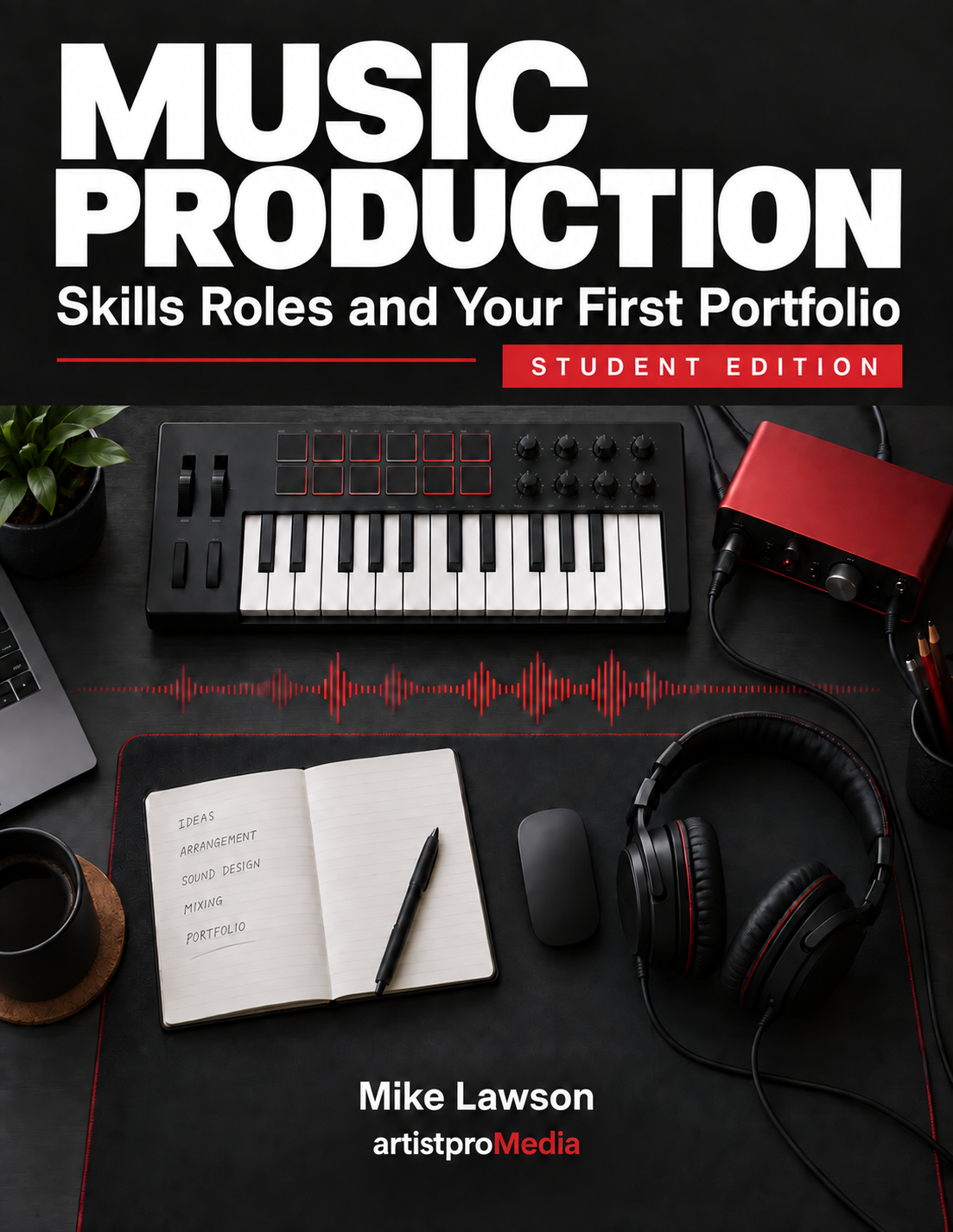
Student Edition
Worked lessons, a workbook with 48 guided exercises, five written assessments, nine practice audio files and a four-entry production portfolio.
Classroom enrollment and access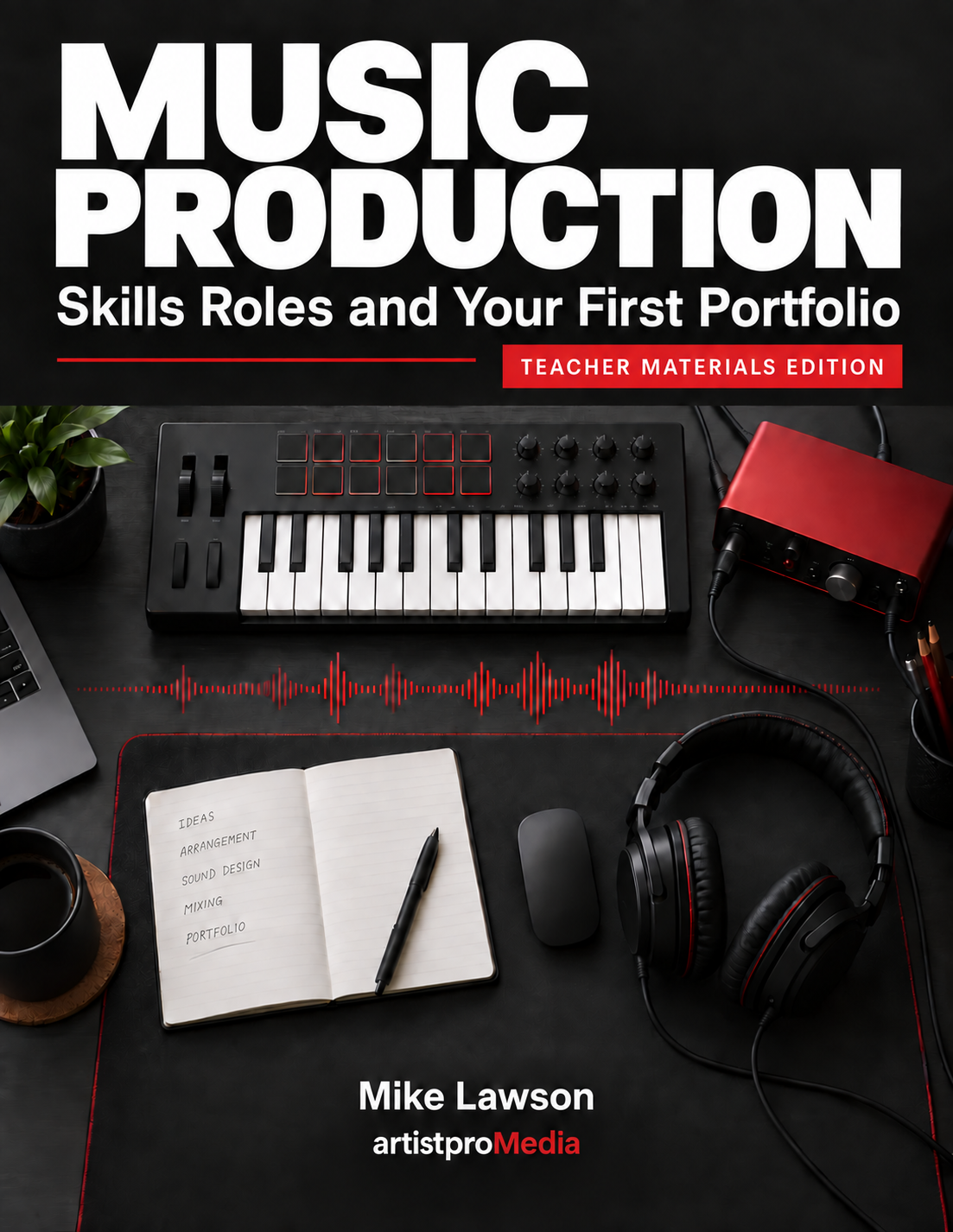
Teacher Materials Edition
Teaching sequences, demonstrations, troubleshooting, answer guidance, marking keys, rubrics, projection agendas, a grade calculator and certificate materials.
Teacher enrollment and accessInside the course
Students compare production choices, troubleshoot signal paths, record and select takes, edit arrangements, balance a mix, document permissions, plan a budget and investigate career roles. Each chapter connects an explanation to a practical task and evidence of learning.
A first recording exercise
Record two repetitions of a four-beat pattern. For a second version, change one musical feature: the position of a rest, the length of the last sound or the emphasized beat. Keep the sound and approximate pace the same. Save both versions, listen back and explain which change serves your intended listener.
Chapter sequence
- How a Recording Gets Made
- Who Does What in Music Production
- Where Production Skills Can Take You
- Find Your Interests and Set a Goal
- Listen Like a Producer
- Plan a Session and Work with People
- Set Up and Record Safely
- Capture a Performance
- Build and Edit an Arrangement
- Mix for the Listener
- Review Revise and Deliver
- Credits Permission and Responsibility
- Time Money and Working Agreements
- Explore Careers and Further Learning
- Build Your First Production Portfolio
- Complete Your Production and Present Your Work
Assessment and certificates
Chapter evidence contributes 40% of the course grade, four unit exams 20%, the written final 10% and the practical final project 30%. Completion requires all assigned work and exams, at least 70% overall and on the final project, and verified delivery, individual contribution, source permissions and recovery. Successful completion results in a certificate.
Standards and classroom implementation
The accompanying guide maps selected National Core Arts Standards for music and ISTE Student Standards to specific course evidence. It distinguishes direct evidence from standards requiring additional repertoire or extension work. Schools determine local credit and state or district alignment.
Equipment and delivery
Use a school-approved recorder, headphones or playback system, and scheduled access to a multitrack application. The downloadable packages include editable Word documents, an offline reader and original practice audio. Teacher materials and answer keys require instructor access.