Load in and plan the room
A successful show begins with an organized arrival.
What you’ll learn
- Plan a clear route from vehicle to stage.
- Choose practical positions for the system and mixing console.
- Protect equipment during transport and setup.
Start with the venue
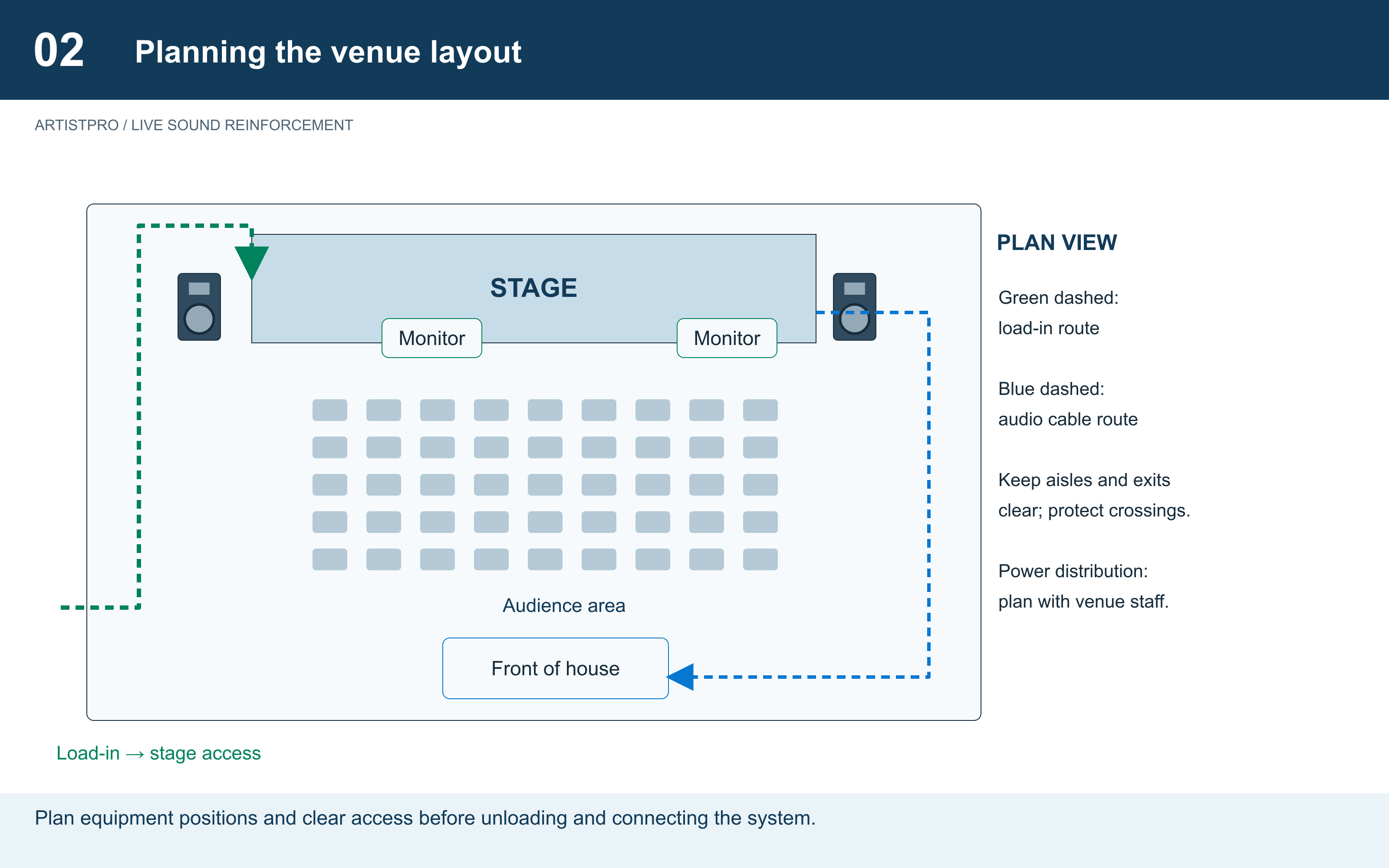
Before unloading, find the person responsible for the event and confirm access, stage location, schedule, storage and the audience layout. Walk the route. Identify steps, narrow doors and places where cases could obstruct people. Assign someone to look after equipment while the room is checked. Unload in an order that supports setup: place large items before filling the stage with stands and cables.
Protect the equipment
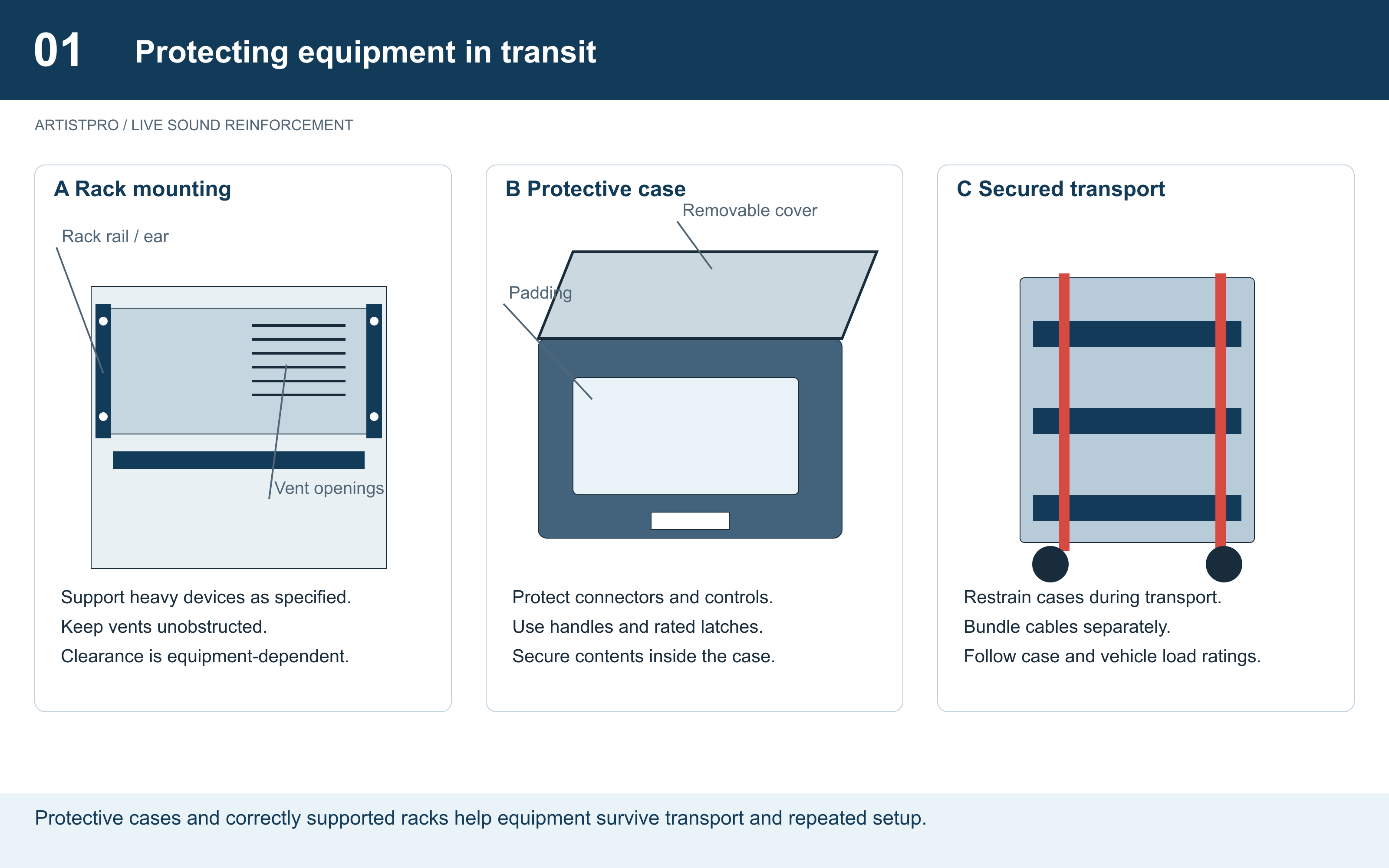
Use cases that fit the equipment and support it during movement. Secure rack equipment according to its manufacturer’s requirements; heavy units may need support beyond the front mounting ears. Maintain the specified ventilation clearance. Inspect wheels, handles, latches and restraints before moving loaded cases. Label cases and maintain an inventory so that missing equipment is noticed before the next show.
Plan positions and routes
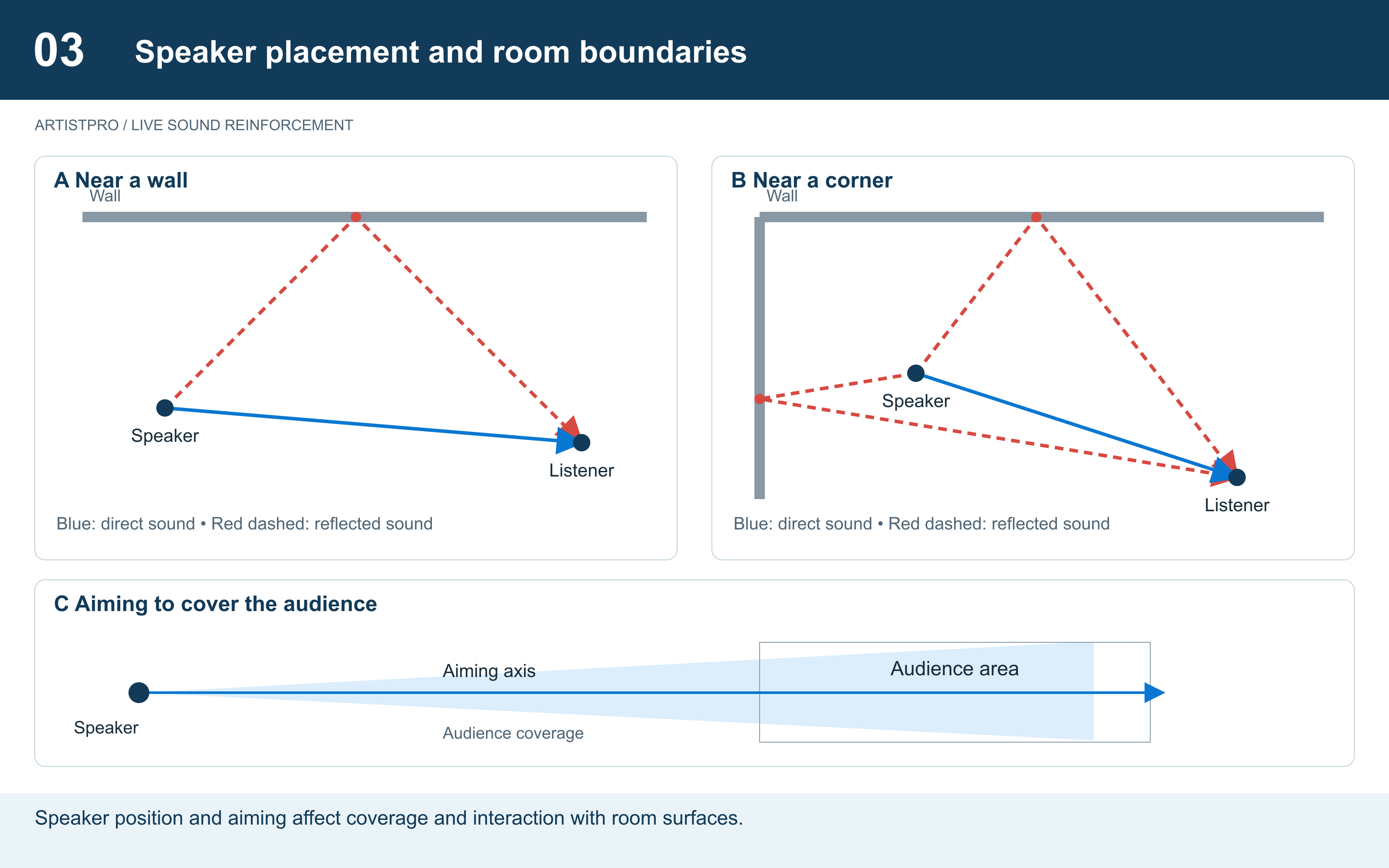
Choose a mixing position that lets you hear a useful representation of the audience sound. A position tucked into a corner or under an overhang may sound different from the main seating area. Plan loudspeaker coverage, stage monitors and cable routes together. Keep access and exit routes clear. Confirm the system’s power requirements with the venue’s qualified personnel before connecting equipment; amplifier audio-output ratings alone do not establish the mains supply needed.
Explore the illustrations
Put it into practice
Draw a room plan showing the stage, audience, main loudspeakers, monitors, console, load-in route and cable routes. Explain how people will move through the room once setup is complete.