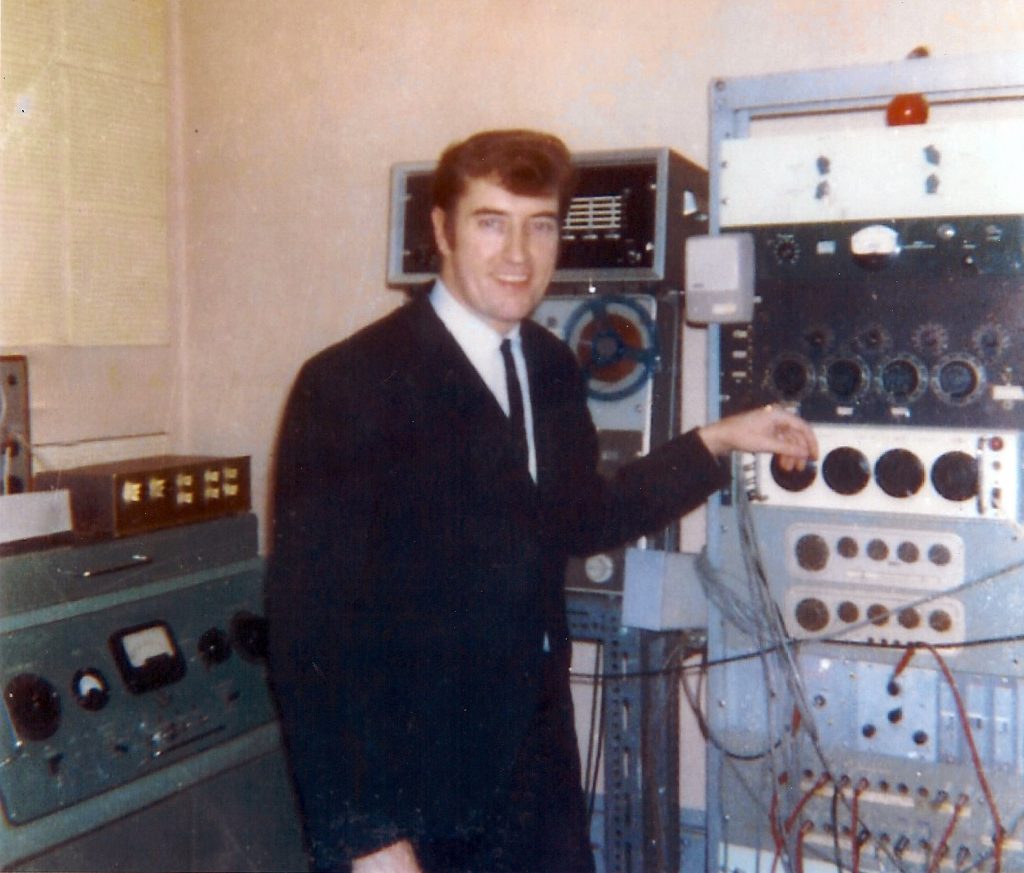
Our tribute to Joe Meek’s restless studio imagination. Ten effects and two virtual instruments, built for colour, control, tape, space and performance.
Meek treated recording equipment as an instrument: close microphones, strong compression, overloaded inputs, tape manipulation and distinctive spaces. Barry Cleveland’s account helps place those techniques in their changing studio context.
Built in C++ with JUCE
The native plugins are compiled C++17 projects built with JUCE, with dedicated DSP, host automation, session-state handling and validation tests. The Online versions use C++ DSP compiled to WebAssembly with browser interfaces.
References, assumptions and the other eleven designs
Ted Fletcher’s November 1983 Studio Sound drawing, page 71, Fig. 4, provides historical context for a bulb-and-photocell compressor. SC2 V2.02 provides a later comparison. Neither is the implementation basis for this compressor.
The optical transfer, LED knee and optical timing are explicit modeling assumptions. Linear amplifier stages are simplified; no measured equivalence to one physical SC2 is asserted. The preamp, equaliser, tape effects, spring, chamber, Cooker, Bass Plucker, Valve Limiter and both instruments are original DSP designs informed by the collection’s musical references and techniques.
TWO VIRTUAL INSTRUMENTS · INCLUDED IN THE COLLECTION
The sound starts with a performance.
Holloway Road gives you two instruments to play alongside its ten effects. Signal Lead explores the expressive, singing character of early electronic keyboards. Motor Bass supplies an original low voice for bass lines, riffs and repeating figures. Play them from a MIDI keyboard, write a part in your DAW, or use their on-screen keys.
SIGNAL LEAD
A singing lead with a restless edge.
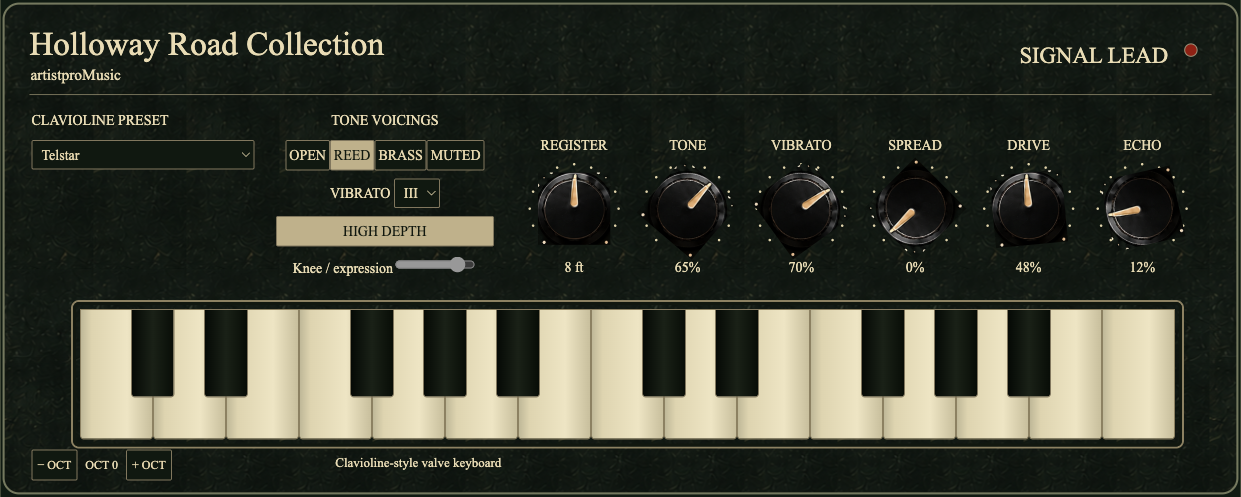
Bring a melody forward with a Clavioline-style voice: a focused reed-like line, a softer muted phrase, a brass-edged hook or a sustained note that moves under your fingers. Its place in the Meek tribute begins with that adventurous electronic-keyboard character; the Telstar preset is the opening sound.
Choose Open, Reed, Brass or Muted voicing, then set the register and brightness. Shape the vibrato with three speed settings, depth and a high-depth switch. Add drive for bite, blend an octave layer with Spread, or bring in the built-in echo. Expression, attack and release let you shape the beginning, movement and end of a phrase.
Six starting points
Telstar
Baby You’re a Rich Man — inspired
Runaway / Musitron — inspired
Singing Violin
Hollow Clarinet
Muted Brass
Try it: Start with Telstar, play a simple single-note melody, then ease back the vibrato and ride expression through the held notes. Add a little echo, or send the instrument through Holloway Road Tape Echo and Black Box Spring for a larger space.
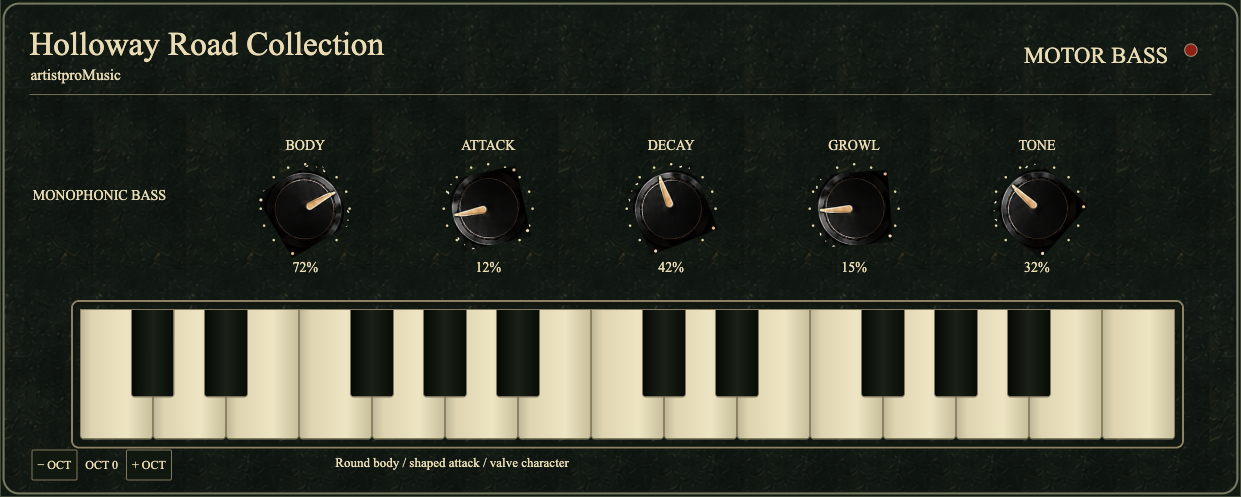
Motor Bass is artistproMusic’s original monophonic bass instrument for the collection. Build a rounded foundation beneath a lead, a short pulsing figure, or a more assertive bass hook. Five controls keep the sound close to the performance.
Body blends in a lower-octave voice for more weight.
Attack shapes how quickly a note arrives.
Decay controls how the initial note settles into its sustained level.
Growl adds saturation and edge.
Tone opens or darkens the sound.
Try it: Use a quick attack and a shorter decay for a repeated bass figure. Increase Body for weight, then raise Growl until the line speaks through the mix. Pair it with a sparse Signal Lead melody and shape the two parts with the collection’s preamp and equaliser.
Both instruments are monophonic: they play one note at a time. The newest held note takes priority; releasing it returns to the previous held note. MIDI velocity, pitch bend, modulation, expression and sustain are supported, and the on-screen keyboards are playable with a mouse. Load them as instruments on a MIDI or instrument track in your DAW.
Your edited controls and selected preset save with the plugin’s state. Signal Lead includes six factory presets; Motor Bass opens with its own default sound. All sound controls are available for host automation.
These are original instrument designs inspired by early electronic-keyboard sounds and the collection’s studio approach. The preset names describe musical references; the sounds use original waveform banks, with no audio sampled from the Telstar recording. Motor Bass is an original artistproMusic design within the tribute.
TEN STUDIO EFFECTS · INCLUDED IN THE COLLECTION
Give the performance its place.
Compressor
Passive optical attenuation and a shared stereo detector, informed by the early SC2 circuit.
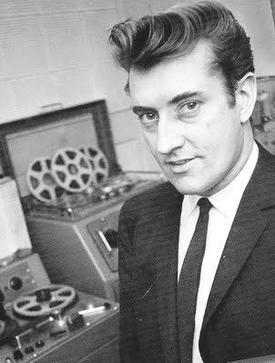 Our tribute to Joe Meek’s restless studio imagination. Ten effects and two virtual instruments, built for colour, control, tape, space and performance.